.png)
Patio Drainage Requirements in Buckinghamshire: How to Avoid Costly Problems

Introduction: Why Patio Drainage Is So Important
A beautifully designed patio can quickly become a problem if drainage is not handled correctly. In Buckinghamshire — where soil conditions, rainfall levels, and planning regulations vary — poor patio drainage is one of the most common causes of failed installations.
Water pooling, damp issues, algae growth, and even structural movement are often the result of inadequate groundworks rather than the paving itself. Whether you are installing a new patio, replacing an old one, or planning a full garden redesign, understanding patio drainage requirements is essential.
This guide explains how patio drainage works, what regulations apply in Buckinghamshire, common mistakes to avoid, and how professional installation ensures long-term performance.
Why Patio Drainage Fails So Often
Many drainage problems stem from shortcuts taken during installation.
Common causes include:
Incorrect patio falls
Inadequate sub-base depth
No drainage channels installed
Poor soil assessment
Ignoring SUDS requirements
Drainage issues rarely appear immediately — they often develop months or years later, making them expensive to fix.
Understanding Buckinghamshire Ground Conditions
Buckinghamshire has a mix of:
Clay-heavy soils
Chalky ground
Variable drainage characteristics
Clay soil, in particular, drains slowly and expands when wet, increasing the risk of:
Water pooling
Surface movement
Frost damage
Professional patio installation must account for these conditions from the outset.
UK Drainage & SUDS Regulations Explained
What Is SUDS?
SUDS stands for Sustainable Drainage Systems. These regulations are designed to:
Reduce surface water runoff
Prevent flooding
Protect drainage infrastructure
In many cases, patios and hard surfaces must allow water to drain naturally into the ground rather than into public drains.
When Do Patio Drainage Rules Apply?
Drainage rules typically apply when:
Creating new impermeable surfaces
Replacing existing patios with non-permeable materials
Working near property boundaries
Professional installers ensure compliance without compromising design.
Key Patio Drainage Solutions
1. Correct Patio Falls
The most important drainage element is the fall — the slight slope that directs water away from the property.
A properly installed patio will:
Slope away from buildings
Direct water toward drainage points
Prevent standing water
Incorrect falls are one of the most common installation errors.
2. Permeable Patio Construction
Permeable patios allow water to drain through the surface and into the ground below.
This can be achieved using:
Permeable paving systems
Resin-bound surfacing
Open-jointed paving with permeable sub-bases
Permeable systems are often ideal for Buckinghamshire properties with drainage restrictions.
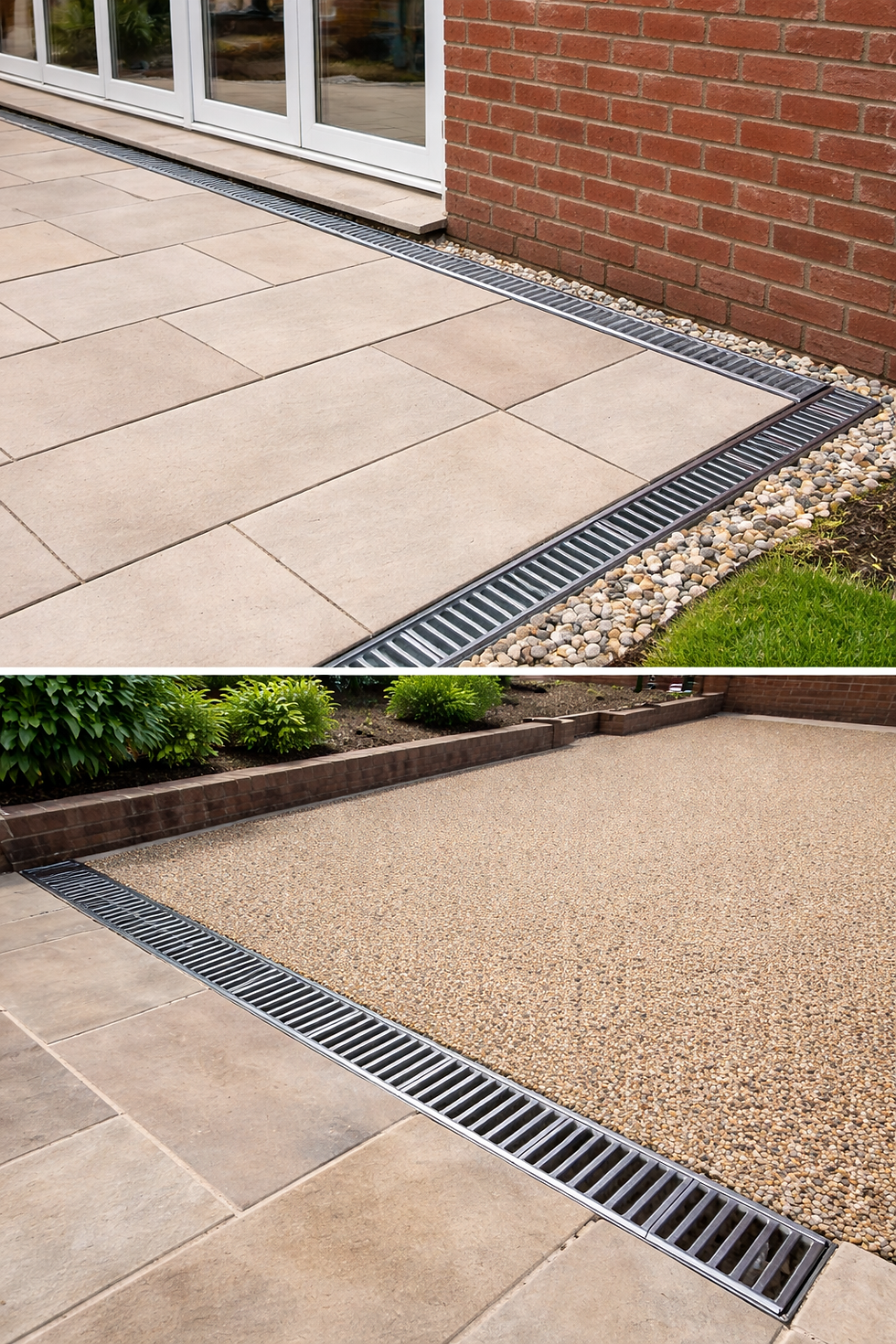
3. Drainage Channels (ACO Drains)
Drainage channels are used where patios sit close to buildings.
They:
Collect surface water
Redirect it safely away
Protect foundations and damp-proof courses
Channels are discreet and can be integrated seamlessly into patio design.
4. Soakaways
A soakaway is an underground system that allows water to disperse naturally into the soil.
They are particularly useful for:
Larger patios
Heavy rainfall areas
Clay-based ground
Soakaways must be correctly sized and positioned to work effectively.
The Role of Groundworks in Patio Drainage
Drainage performance depends heavily on what lies beneath the surface.
Professional groundworks include:
Proper excavation depth
Installation of free-draining sub-base materials
Mechanical compaction
Separation layers to prevent contamination
Without these steps, even the best drainage design will fail.
Drainage Considerations for Different Patio Materials
Porcelain Paving
Non-porous surface
Requires precise falls and drainage channels
Ideal for modern designs when installed correctly
Natural Stone (Sandstone & Limestone)
Slightly porous
Still requires proper drainage planning
Benefits from sealed finishes
Block Paving
Can be permeable if designed correctly
Jointing and sub-base choice are critical
Resin-Bound Surfacing
Fully permeable
Excellent for SUDS compliance
Requires specialist installation
Common Patio Drainage Mistakes to Avoid
1. No Drainage Planning
Assuming water will “find its way” always leads to problems.
2. Shallow Sub-Bases
Insufficient depth prevents proper water movement.
3. Poor Level Control
Even minor errors in slope can cause pooling.
4. Ignoring Local Conditions
Buckinghamshire soil and rainfall patterns must be considered.
Drainage for Sloped & Terraced Gardens
Many Buckinghamshire gardens are not flat.
Professional solutions include:
Split-level patios
Retaining walls with drainage
Step-integrated drainage channels
Directional water management
These designs improve both function and appearance.

Why Professional Installation Makes the Difference
Professional patio installers:
Understand local regulations
Design drainage into the project
Use correct materials
Test levels before laying
Guarantee long-term performance
Drainage is not visible once the patio is complete — but it determines whether the installation succeeds or fails.
Conclusion: Get Drainage Right from Day One
Patio drainage is not an optional extra — it is essential. In Buckinghamshire, where soil conditions and regulations vary, professional planning and installation are critical to avoid long-term problems.
By choosing the right drainage solutions and ensuring proper groundworks, homeowners can enjoy patios that remain functional, safe, and attractive for decades.
Planning a new patio in Buckinghamshire?
This content, including all written text and visual assets, was developed with AI assistance and verified through human editorial review.


Comments