.png)
What to Expect During Groundworks for an Extension or New Patio


Introduction: Why Groundworks Are the Most Important Stage
When homeowners plan a new extension or patio, the visible result often gets the most attention — the paving, the finishes, the layout. But what truly determines the success and lifespan of the project happens before anything is built.
Groundworks are the foundation of every successful extension or patio. Done correctly, they ensure stability, proper drainage, and long-term durability. Done poorly, they lead to sinking patios, cracking surfaces, drainage issues, and costly repairs.
This guide explains exactly what to expect during the groundworks phase, how professionals approach the process, and why experienced groundworks make all the difference for homeowners, landlords, and developers.
Why Proper Groundworks Matter
Groundworks serve several critical purposes:
Provide structural stability
Manage drainage and water flow
Prevent movement and subsidence
Create correct levels and falls
Ensure compliance with building regulations
Whether for a house extension or a new patio, cutting corners during groundworks almost always results in problems later.
Stage 1: Site Assessment & Planning
Every groundwork project begins with a detailed site assessment.
This includes:
Measuring levels and gradients
Assessing soil type (clay, chalk, mixed ground)
Identifying drainage routes
Checking access for machinery
Planning spoil removal
For extensions, groundwork planning also considers:
Existing foundations
Proximity to neighbouring properties
Load requirements
Good planning ensures the work runs efficiently and avoids surprises once excavation begins.
Stage 2: Site Clearance & Preparation
Before excavation starts, the area must be cleared and prepared.
This typically involves:
Removing turf, plants, and topsoil
Demolishing existing patios or paths
Protecting nearby structures
Marking out excavation areas
Clearance allows accurate excavation and prevents contamination of sub-base materials.
Stage 3: Excavation
Excavation is one of the most critical stages of groundworks.
Excavation for Extensions
For extensions, excavation involves:
Digging foundation trenches to required depth
Removing unstable ground
Preparing for concrete foundations
Depth and width depend on:
Soil conditions
Structural load
Building regulations
Incorrect excavation depth is a leading cause of foundation failure.
Excavation for Patios
For patios, excavation ensures:
Adequate depth for sub-base and paving
Correct levels relative to the property
Proper falls for drainage
A typical patio excavation includes space for:
MOT Type 1 sub-base
Bedding layer
Paving thickness
Stage 4: Sub-Base Installation
The sub-base is what gives patios and hard landscaping their strength.
What Is a Sub-Base?
A sub-base is usually constructed using MOT Type 1, a crushed stone material designed to compact tightly and evenly.
Why Sub-Base Quality Is Crucial
A properly installed sub-base:
Prevents sinking and movement
Distributes weight evenly
Supports drainage
Extends the lifespan of the surface
Professional installers compact the sub-base in layers using mechanical equipment to ensure maximum stability.
Stage 5: Drainage Installation
Drainage is often the most overlooked part of groundworks — and the most important.
Drainage for Extensions
Includes:
Foul and surface water drainage
Connection to existing systems
Compliance with building regulations
Drainage for Patios & Hard Landscaping
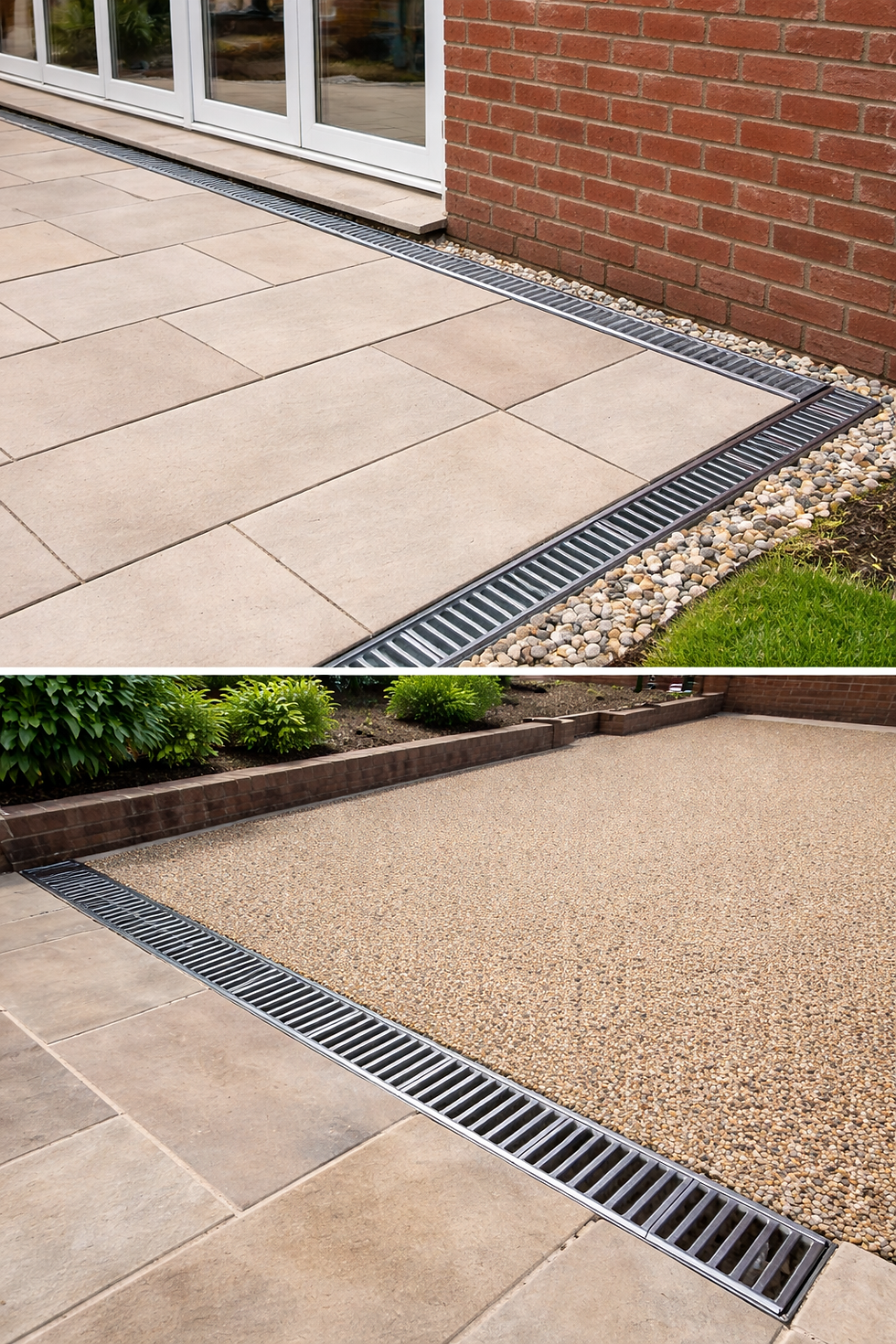
Professional drainage solutions may include:
ACO drainage channels
Correct patio falls
Permeable paving options
Soakaways where required
Proper drainage prevents water pooling, damp issues, and surface damage.
Stage 6: Levelling & Setting Falls
Once the sub-base and drainage are installed, precise levelling is essential.
Professionals ensure:
Patios slope away from buildings
Water flows to drainage points
Steps and transitions are even
Finished levels align with doors and paths
Incorrect falls can cause water ingress and surface damage over time.
Stage 7: Preparation for Construction or Paving
At this point, the groundwork phase is nearly complete.
For Extensions
The site is prepared for:
Concrete pouring
Foundation curing
Brickwork and construction
For Patios
The area is ready for:
Bedding layer installation
Slab laying
Jointing and finishing
Because the groundwork has been done correctly, the visible installation proceeds smoothly.
Common Groundwork Mistakes to Avoid
1. Insufficient Excavation
Leads to sinking patios and unstable foundations.
2. Poor Sub-Base Compaction
Causes movement and cracking over time.
3. Ignoring Drainage
Results in standing water and long-term damage.
4. Rushing the Process
Good groundworks take time — shortcuts always show later.
What Homeowners, Landlords & Developers Should Expect
Homeowners
Clear explanation of the process
Minimal disruption
Long-lasting results
Landlords
Durable, low-maintenance installations
Reduced repair costs
Reliable timelines
Developers
Compliance with regulations
Efficient scheduling
Reduced risk of defects
Why Use a Professional Groundworks Contractor

Professional groundworks contractors bring:
Local soil knowledge
Correct equipment
Regulatory compliance
Proven processes
Accountability
Using experienced professionals protects your investment and ensures peace of mind.
Conclusion: Strong Groundworks Deliver Lasting Results
Whether you’re building an extension or installing a new patio, groundworks are the most important phase of the project. When done properly, they ensure stability, drainage, and durability — allowing the finished surface to perform as intended for decades.
Investing in professional groundworks is investing in the long-term success of your property.
Planning an extension or new patio?
This content, including all written text and visual assets, was developed with AI assistance and verified through human editorial review.


Comments